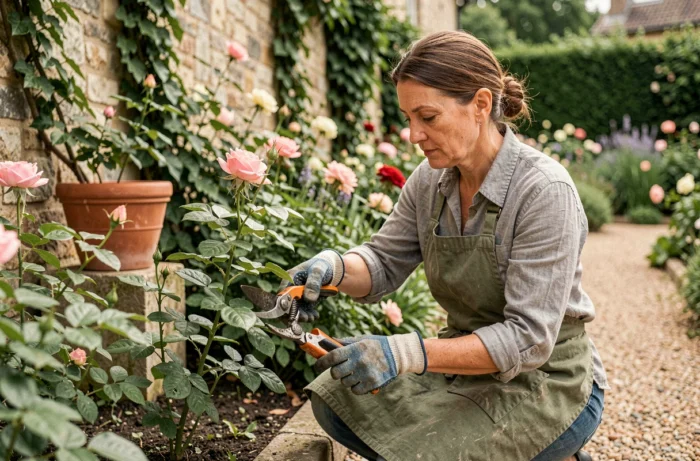
A garden maintained throughout the year relies less on the amount of work done than on the right action at the right time. Each season imposes specific interventions for the soil, plants, and water management. Adapting garden maintenance to this natural rhythm avoids costly catch-ups in time and energy.
Adapting your plants to water stress before thinking about maintenance
The repeated drought episodes in recent years change the game for plant selection. The classic reflex was to choose plants based on their aesthetic appeal or flowering period. Today, the choice of plants is a tool for climate adaptation.
Rosemary, thyme, certain lavenders, sages, and grasses tolerate poor soils and water stress much better than water-hungry perennials. Landscapers and local authorities are already experimenting with green spaces that are less dependent on watering, with areas left in extensive management and non-grassed surfaces.
Before planning your maintenance seasons, it is worth exploring conseil-jardinage.com for your needs regarding plant selection suited to your local climate. Gradually replacing water-intensive plants with drought-resistant species reduces the watering and care burden throughout the year.
Soil maintenance: the foundation that most gardeners neglect
A living soil supports a healthy garden. The earth is not just a support: its structure, organic matter content, and biological activity directly condition the vigor of plants and their resistance to climatic hazards.
Nourishing the soil rather than the plants
Adding homemade compost remains the most cost-effective action. Organic waste (peels, coffee grounds, grass clippings, unprinted cardboard) represents a significant portion of our trash. By recycling them, you produce quality soil without purchase costs.
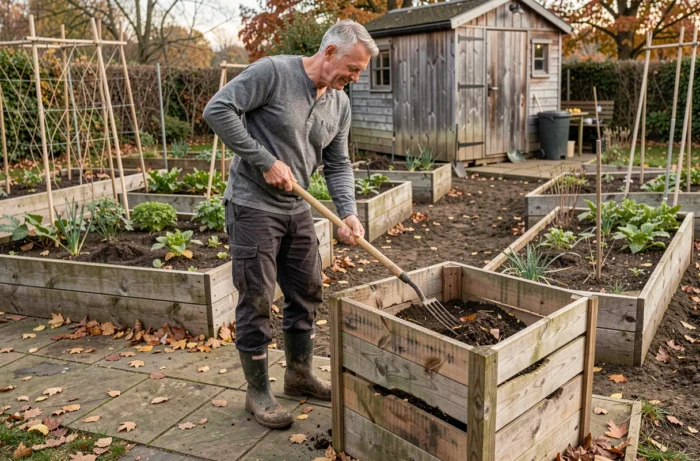
Spread this compost on the surface in autumn, in a layer a few centimeters thick. Soil organisms will naturally incorporate it during the winter. In spring, the soil is softer, better drained, and more fertile.
Mulching as a permanent protection
A bare soil is a degrading soil. Mulching (dead leaves, chipped branches, straw, dried clippings) limits evaporation in summer, protects against frost in winter, and slows the emergence of weeds year-round.
- In autumn, spread dead leaves directly on the flower beds and vegetable garden instead of disposing of them. They form a free insulating cover.
- In spring, renew the mulch with chips or straw to maintain soil freshness during the hot months.
- In summer, avoid mulching with materials that are too fine, which compact and prevent water from penetrating. Prefer coarse chips.
Pruning and interventions on plants according to the seasons
Pruning is the maintenance action that generates the most mistakes. Pruning at the wrong time compromises flowering, weakens the plant against cold or diseases, and requires corrections the following year.
Late winter pruning: the strategic moment
The period between late February and mid-March, before bud break, is suitable for most summer-flowering shrubs and fruit trees. The sap has not yet circulated actively, and cuts heal better. Prune before the resumption of vegetation, never during.
Spring-flowering shrubs (forsythia, lilac, spiraea) should be pruned after their flowering. Confusing them with summer-flowering shrubs is the most common mistake.
After a heatwave: don’t pull out too quickly
A piece of advice relayed by Rustica is worth noting: after a heatwave, wait several weeks before pulling out plants that seem dead. Some will regrow from the stump or roots once temperatures drop. Also, avoid severe pruning and intensive fertilization right after a period of extreme heat, as the plant is in recovery mode.
Water management in the garden: water less but better
Watering is the most resource- and time-consuming task. A few technical adjustments can reduce water consumption without compromising plant health.
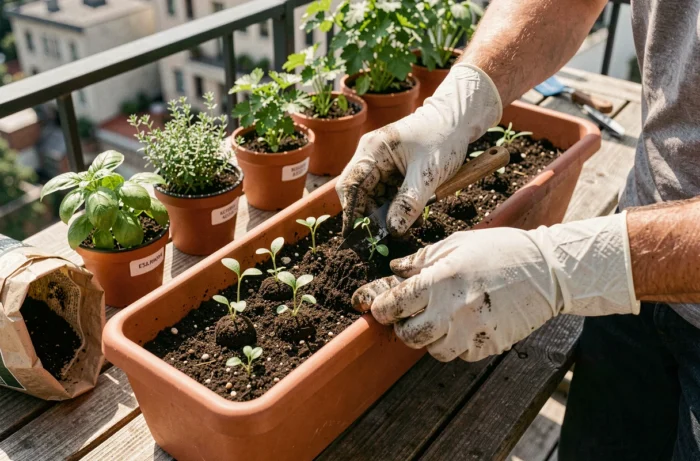
Water early in the morning or late in the day. Water applied in full sun evaporates largely before reaching the roots. Direct the stream at the base of the plants rather than spraying on the foliage, which also limits the development of fungal diseases.
A deep and spaced watering is better than daily superficial waterings. Frequent but light applications keep roots near the surface, making the plant more vulnerable to drought. A generous watering every three to five days encourages deep rooting.
Collecting rainwater via tanks placed under downspouts complements the system. This non-limestone water is particularly suitable for acid-loving plants like hydrangeas or rhododendrons.
Simplified garden maintenance calendar by season
| Season | Soil | Plants | Water |
|---|---|---|---|
| Spring | Renew the mulch, aerate compacted soil | Prune summer-flowering shrubs, sow in the vegetable garden | Gradually resume watering |
| Summer | Maintain thick mulch | Remove faded flowers, harvest | Deep and spaced watering, early in the morning |
| Autumn | Spread compost, cover with dead leaves | Plant trees and shrubs, divide perennials | Reduce then stop watering |
| Winter | Let the soil rest under its mulch | Training pruning, protect frost-sensitive species | Empty and store the watering system |
Maintaining a garden year-round comes down to anticipating each season rather than reacting in urgency. Choosing plants suited to the local climate, a nourished and permanently protected soil, and reasoned watering are the three pillars of a garden that requires less effort over the years.