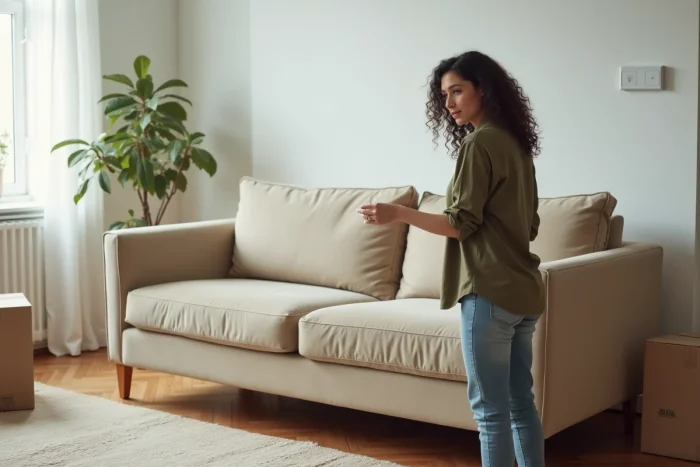
Your sofa has lost its seating, the fabric is worn, or you’re simply changing styles. Recycling or selling an old sofa is not just about putting it on the sidewalk. Since the strengthening of the REP Furniture sector by the AGEC law, options have multiplied, but they remain poorly known. Here are concrete ways to part with it without waste.
Eco-organisms and the REP Furniture sector: the circuit that few individuals use
When thinking about “getting rid of a sofa,” the waste disposal site comes to mind first. This reflex is understandable, but there is a more structured circuit.
Two eco-organisms manage the collection of used furniture in France: Écomaison and Valdelia. Their role is to direct furniture towards reuse or recycling rather than landfill. Specifically, they finance partnerships with recycling centers and social and solidarity economy associations to recover, restore, or dismantle sofas.
Écomaison has launched the platform “Les Bonnes Choses,” which offers a national map of collection points. You enter your address, and the platform displays local recycling centers or associations ready to pick up your sofa. The advantage compared to a drop-off at a waste disposal site is: a sofa in good condition goes to a new home instead of being crushed.
To delve into the recovery conditions by retailers, an article details the recovery of old sofas on Déco en Vogue with store-by-store policies.
In-store take-back: second-hand corners and “1-for-1 take-back”
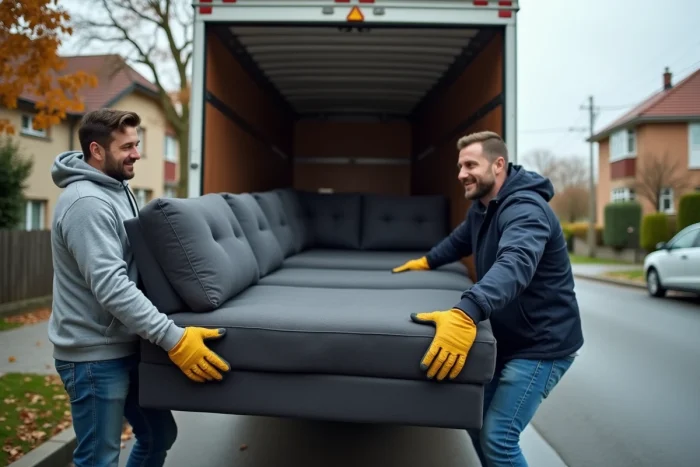
Are you buying a new sofa and would like the seller to take back the old one? This principle is called 1-for-1 take-back. The retailer delivering a new piece of furniture must agree to take back the equivalent used item for free, provided you request it at the time of order.
In practice, not all retailers apply this with the same enthusiasm. Some limit take-backs to products delivered to homes. Others exclude sofas that are too large or too damaged. Check the conditions before signing the delivery slip.
Second-hand corners in stores
Several generalist retailers (Castorama, Leroy Merlin, Alinéa) are testing spaces dedicated to the second life of furniture, sometimes in partnership with platforms like Youzd or Geev. The principle: you drop off your furniture in a dedicated corner, and it is offered for sale on-site or online, in a short circuit.
This system is still limited to certain urban areas and is not yet widespread across each retailer’s network. Before loading your sofa into a van, call the store to confirm that it accepts drop-offs.
Selling a second-hand sofa: condition of the furniture and suitable channels
Selling an old sofa assumes that it is still presentable. A patinated leather sofa sells better than a stained fabric sofa. Ask yourself: would you buy this sofa in its current state?
- If the structure is sound and the covering is acceptable, platforms like Leboncoin or Facebook Marketplace remain the most effective. Post photos in natural light, mention the exact dimensions, and specify if the sofa is disassemblable (a corner sofa that fits in a staircase sells much better).
- If the sofa is branded or designer, specialized second-hand furniture sites (Selency, Design Market) allow you to reach buyers willing to pay a fair price for quality furniture.
- If the sofa is functional but worn, donating via Geev or Emmaüs remains the quickest solution. You avoid negotiation, and the furniture finds a buyer in a few days.
Clean the fabric or leather, remove pet hair, and take the time to write a clear ad with well-taken photos. A properly presented sofa attracts more potential buyers.
Bulk waste collection at the door: the new rules to know
Free bulk waste collection at the foot of the building has long been an automatic process. In several metropolitan areas (Paris, Lyon, Bordeaux, Nantes), this service is evolving. More and more municipalities are requiring online appointment scheduling before any collection of large furniture.
Illegal dumping on the sidewalk can result in a fine. And a sofa abandoned outside often ends up soaked by rain, making it unsuitable for reuse and complicating its recycling.
Waste disposal site: the last resort solution
If the sofa is beyond recovery (collapsed foam, broken structure, moldy fabric), the waste disposal site remains the logical option. Bring it to the “bulk waste” or “furniture” bin depending on your municipality’s organization. Most waste disposal sites accept sofas for free from individuals, but some limit the number of visits per month.
Before you go, check two things: the opening hours (which often vary in summer) and the maximum size accepted without an appointment.
Recycling the materials of a sofa: what can really be recovered
A sofa contains several materials: structural wood, polyurethane foam, fabric or leather, metal springs, sometimes plastic. The REP sector aims to separate these components for recovery.
- Wood and metal are easily recyclable through traditional channels.
- Polyurethane foam can be shredded and reused as an insulation underlay or flooring, provided it is sorted correctly.
- Fabric and leather are more difficult to recycle. Only uncontaminated textiles can join a recovery channel.
In most cases, individuals do not have to separate the materials themselves. Recycling centers and sorting facilities managed by eco-organisms take care of that. Your role is limited to transporting the sofa to the right collection point.
Whether you choose to sell, donate, or go to the waste disposal site, the common point remains the same: plan ahead. A sofa that you get rid of at the last minute, the day before a delivery, often ends up on the sidewalk. Allow one to two weeks to find a buyer or book a collection slot, and your living room will be cleared without any unpleasant surprises.